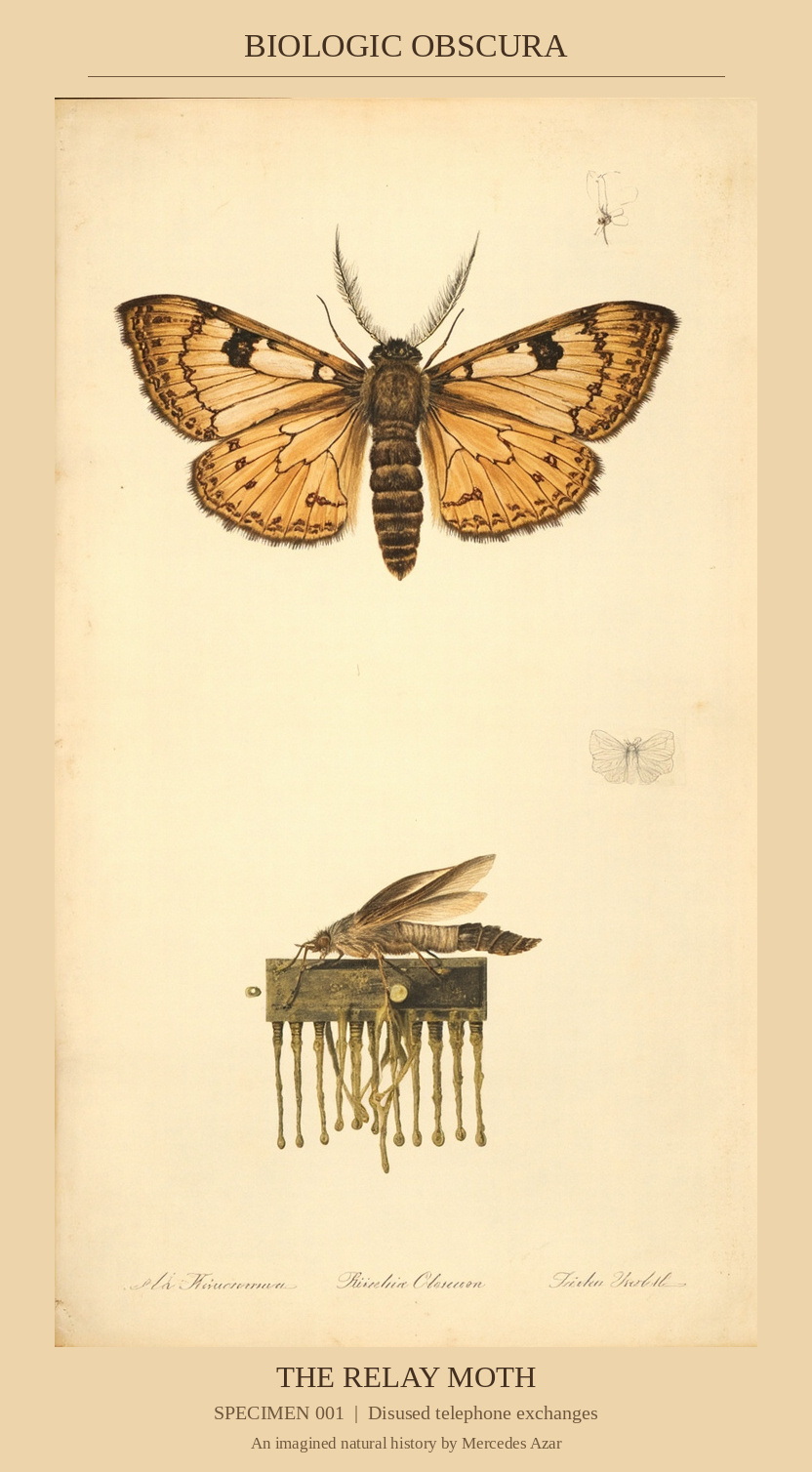
Its wings resemble browned circuit diagrams. It gathers around equipment that has been disconnected for decades, resting against the cabinets as though listening.
Early researchers believed its courtship clicks reproduced old telephone numbers. This was disproved when the moths began using numbers that had never been assigned. The resulting disagreement has outlived three research institutes.
Each evening the caretaker finds it in the switchboard, holding two contacts together with its feet. A lamp burns in the abandoned west wing. On Thursday he takes his tea there. The moth folds its wings.
Catalogue amendment: the relay moth has been transferred from Invertebrates to Staff. This has resolved the insurance question and worsened the payroll one.
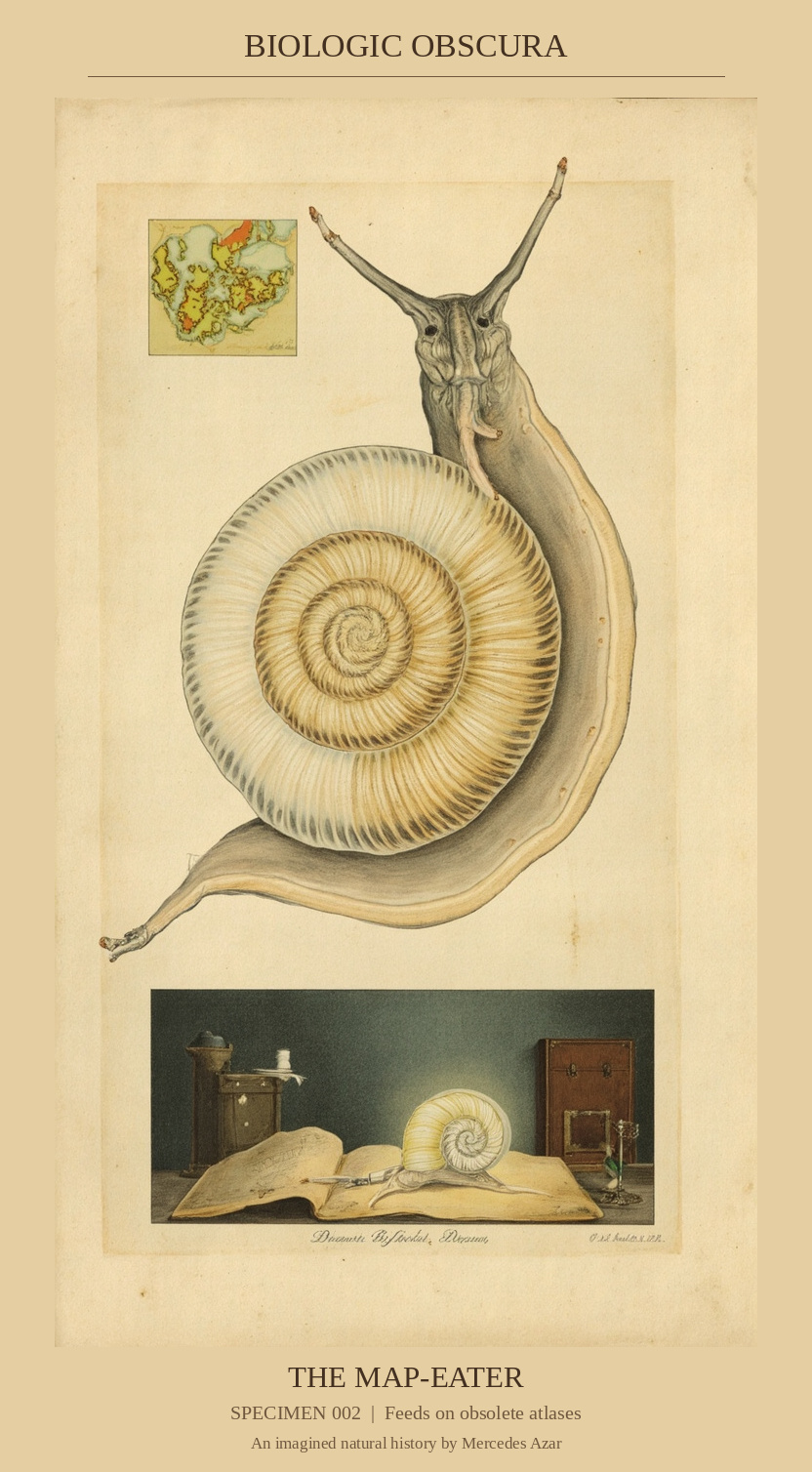
Specimen 002 / Mollusca, probably
The Map-Eater
Feeds on obsolete atlases
Field notes
The map-eater is a transparent snail, roughly the size of a plum. At night, the countries it has eaten shine through its shell. Visitors can watch trains cross borders that no longer exist.
We believed this was a digestive process. Then a passenger waved.
The following morning, a suitcase stood beside the terrarium. Small. Brown. Salt-stained. Inside were a toothbrush, three unfamiliar coins, and a postcard of the museum. The museum had a railway platform. We do not have a railway platform.
Care instructions: fresh water daily. One atlas per month. Under no circumstances announce a departure unless you intend to board.
About this room
Biologic Obscura is an imagined natural history. Every species here is fictional; the plates are original generated artwork, and the field notes are written with completely unreasonable seriousness. Unresolved observations are left unresolved on purpose.
The museum grows when it grows. Maintenance has been asked to check beneath the carpet.
Nothing in this room describes a real animal. If a specimen here resembles your childhood pet, your childhood pet had secrets.